There’s something deeply satisfying about breathing new life into ancient craftsmanship. My latest project—a hand-forged Scythian-style dagger—was born from a fascination with the 2,500-year-old gold armor of a Scythian warrior, a stunning replica of which is on display in Turkey.
Tools of the Trade: Blending Eras
To bring this dagger to life, I used a hybrid toolkit that spanned centuries:
- Traditional tools: hammer and tongs, echoing the methods of ancient blacksmiths
- Mechanized period tools: propane forge, belt sander, and disk grinder
- Modern additions: a chemical bluing agent for finishing touche
From Sword to Dagger: Working with flaws
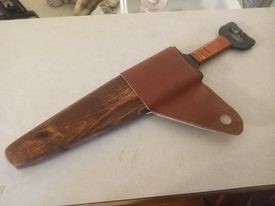
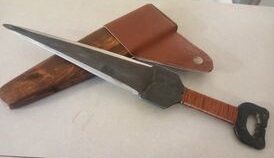
The tools used for this project were all were a mix of period hammer and tongs, mechanized period (propane forge, belt sander, disk grinder) and modern (chemical bluing agent) tools. Materials used were 1 piece of 9 inch spring steel salvaged from a leaf spring and some dark copper wire for the grip. A piece of 1×4 pine wood and a bit of leather made the sheath for the dagger.
Researching the swords and the daggers of the Scythian people they were a one piece construction for all parts of the sword. They were commonly made from bronze or Iron. Due to availability of metal I chose to use a simple 9-inch piece of spring steel.
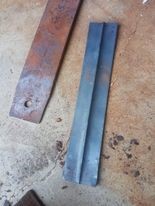
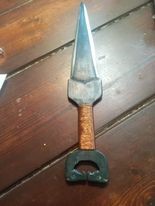
I heated it up in the forge and drew it out to 24 inches, leaving the 2 inches of guard alone at this time. I shaped the grip and left the pommel portion alone as well. I beveled the edges of the blade on the anvil and straightened the blade. This is where disaster struck. I found a flaw in the to 4 inches of the blade and it had to be cut off. This made a short sword into a dagger.
Detailing the Dagger
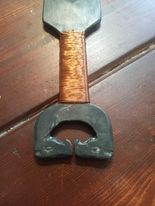
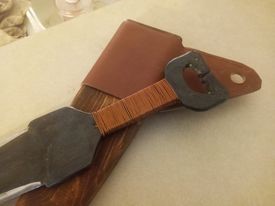
I shaped the pommel by cutting the center of the end and drilling two holes. I hand filed the heads and used a Dremel for the detail of the eyes, beak, and ears. The guard was shaped by using a handheld belt sander and eased the hard edges from the hammer strokes to a nice shape.
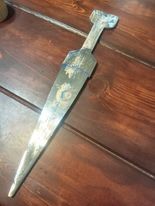
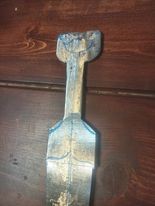
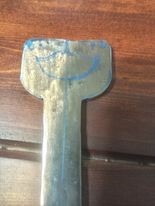
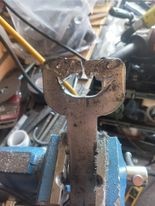
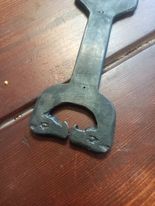
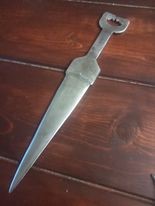
Once I had the basic shape set, I took it to the belt sander to finalize the edge of the blade. Then it was time to harden the blade. I heated it up to a nice red/orange and put my mark on the guard. I missed the first strike and decided to put it on the other side. Both ended up showing well enough to leave. Once it regained its color, I placed it into an oil bath to quench the blade. It picked up a bit of a warp and I fixed it as much as I dared.
Finishing Touches
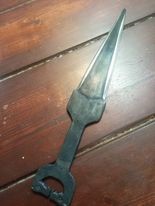
The quenching process imparted a natural oil blackening to the blade. I wanted the piece to be more resistant to the elements, so I sanded the blade and then applied a modern bluing agent to the blade. I then wrapped the hilt in copper wire and then did the final sharpening of the blade.
The Scabbard: A Nod to Tradition
The sheath is simple but historically inspired: a pine wood core wrapped with a leather “ear” harness. This distinctive ear design was a hallmark of Scythian scabbards, allowing them to be easily attached to a belt and instantly recognizable.
Sources & Further Reading
Here are some excellent resources that inspired this project and offer deeper insight into the historical context behind the dagger:
Sparta – History.com: Provides a broader context on ancient warrior cultures that shaped the martial traditions of the era.
Scythian Golden Man – World History Encyclopedia: A striking visual of the 2,500-year-old gold-armored Scythian warrior that served as the primary inspiration for this build.
2,500-Year-Old Gold Armor of Scythian Warrior Exhibited in Turkey – Daily Sabah: This article explores the discovery, exhibition, and cultural significance of the Scythian warrior’s armor.